
Introduction to Thigh Pain Relief
Is thigh pain slowing you down? Fortunately, the solution may be simpler than you think. In this post, we will explore effective exercises tailored for different types of thigh pain, enabling you to regain comfort and mobility.
Understanding the Causes of Thigh Pain
Thigh pain can arise from various issues, including stiff quadriceps or hip flexor muscles, as well as nerve problems such as those involving the femoral nerve. Identifying the root cause is crucial to finding relief.
Identifying Stiff Hip Flexors and Quadriceps
To determine if you have stiff hip flexors or quadricep muscles, particularly the rectus femoris, you can perform a simple test:
- Lie down on your back at the edge of the bed.
- Bring one knee up towards your chest while allowing the opposite leg to drop down.
- Keep your lower back flat against the bed. Ideally, your thigh should fall flat, and your knee should bend 80 to 90 degrees.
If your thigh does not fall flat, this indicates stiff hip flexors, which can contribute to front thigh pain.
Effective Stretches for Hip Flexors
If you find stiffness during the test, you can use the test position as an exercise. Hold this position and practice deep breathing, relaxing into the stretch. You can also contract your glutes and hamstrings to help pull your thigh towards the floor, providing additional relief.
Another effective stretch involves kneeling on the floor or bed:
- Position one leg up and lunge forward.
- Maintain a flat lower back by performing a slight pelvic tilt and squeezing your glutes.
This stretch effectively targets both the iliopsoas and rectus femoris, both of which can contribute to thigh pain.
Nerve Gliding Techniques
It’s essential to avoid keeping the femoral nerve on tension. Instead, consider performing a nerve glide:
- Move your leg gently back and forth while in the stretching position.
This motion can help relieve thigh pain effectively.
Addressing Outer Thigh Pain
Outer thigh pain may be due to stiffness in the IT band or the tensor fascia latae (TFL). You can stretch the TFL by slightly shifting your hips to the side while maintaining a stretch position. Hold this stretch for about a minute for optimal relief.
Additionally, using a massage gun on your quadriceps and outer thigh can effectively alleviate tension. Avoid massaging directly over the IT band; instead, focus on the vastus lateralis on both sides of the band.
Strengthening Exercises for Thigh Muscles
Strengthening the gluteus medius and gluteus minimus is vital for overall thigh health. One effective exercise is the clam shell:
- Lie on your side with your knees bent.
- Focus on keeping your body stable and lift your top knee while ensuring your pelvis remains forward.
- Hold for 10 seconds and repeat 10 times.
As this exercise becomes easier, you can straighten your leg to increase the challenge. Remember to maintain external rotation to avoid overworking the TFL.
Inner Thigh Pain Management
Inner thigh pain can also be alleviated by strengthening the gluteus medius and minimus. Additionally, stretching the inner thigh muscles is crucial:
- Sit with your feet together and pull them in towards your groin.
- Allow your knees to drop out to the side, using your elbows for added pressure if needed.
This stretch effectively targets the adductors, providing relief.
Nerve Gliding for Inner Thigh Pain
To perform a nerve glide for the obturator nerve, stand with a staggered stance and gently move your hip side to side. This motion also strengthens the opposing hip muscles.
Back of Thigh Pain and Sciatica
Back of thigh pain is often related to sciatica, which may arise from a pinched nerve in the lower back. If you experience this pain, avoid static stretching of the hamstrings, as it can irritate the sciatic nerve.
Instead, try a nerve glide by sitting at the edge of a bed and moving your leg back and forth, simulating a hamstring stretch without holding it. This helps the sciatic nerve glide through the surrounding tissues.
Conclusion: Next Steps for Thigh Pain Relief
Understanding the causes of thigh pain and implementing these targeted exercises can significantly improve your comfort and mobility. If you experience persistent pain, consider consulting a healthcare professional for personalized guidance.
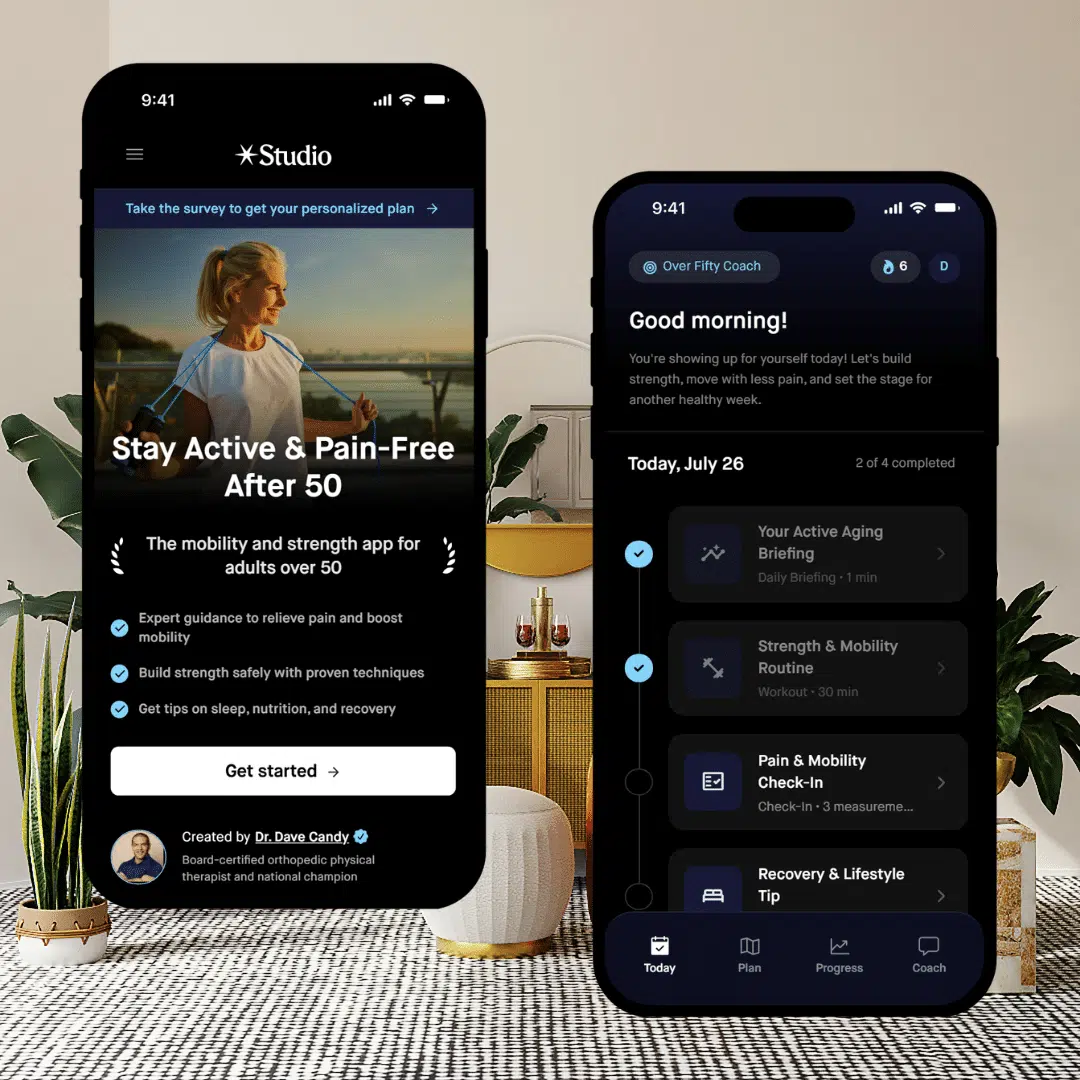
Need Help To Stay Strong and Mobile After 50?
Affiliate Disclosure: This post contains affiliate links to Amazon and/or other sites. While I only recommend products that I trust, as an Amazon Associate, I earn commission from qualifying purchases at no extra cost to you.
Medical Disclaimer: The content on this site is for educational and informational purposes only and is not intended as medical advice. Always consult with a qualified healthcare professional before beginning any new exercise program, diet, or supplement regimen, especially if you have pre-existing health conditions.