
What is Spinal Stenosis?
Spinal stenosis is a condition that occurs when the spaces within your spine narrow, leading to pressure on the spinal cord and nerves. This narrowing can cause discomfort, pain, and difficulty in standing or walking for extended periods. Understanding spinal stenosis is crucial for effective management and long-term relief.
Symptoms of Spinal Stenosis
Common symptoms of spinal stenosis include:
- Lower back pain
- Numbness or tingling in the legs
- Weakness in the legs
- Pain that worsens with standing or walking and is relieved by sitting down
If you experience any of these symptoms, it’s essential to consult with a healthcare professional. They can diagnose the condition and recommend appropriate treatment.
5 Spinal Stenosis Exercises to Stand Longer and Improve Walking Distance
Managing spinal stenosis involves a combination of exercises and daily postural changes. Here are some exercises to help you stand longer and walk farther without pain:
1. Standing Posterior Pelvic Tilt
When you stand up tall with your lower back arched, that further narrows the spaces where the nerve roots to your legs exit your spine. Often people are told to “stand up tall” by doctors, family members, or friends, but often that’s counter productive.
To stand long without back or leg pain, roll your pelvic underneath of you to flatten the curve of your lower back as shown in the video. You can do this as an exercise, but ultimately you want to learn to stand this way more often during the day.
2. Standing Back to Wall Posture Stretch
Stand with your lower back against a wall and put your arms up like a goal post as shown in the video. Rotate your hands back toward the wall, but DO NOT allow your lower back to arch off of the wall. Hold this position for a total of 60 seconds, taking breaks as needed.
3. Standing Hip Flexor Stretch
Your hip flexors (iliopsoas) attach to your pelvis and the front of your lumber spine. If they are stiff, they can pull you into a forward pelvic tilt, which increases the arch in your lower back and narrows the spaces around your nerve.
To stretch your hip flexors, stand with one leg in front of the other. Perform a posterior pelvic tilt as you did in the first exercise. Then slightly push your pelvis forward until you feel a stretch in the front of the leg that is behind you.
Make sure to maintain the pelvic tilt and do not allow your lower back to arch. Hold for 60 seconds on each leg.
You can also turn this into a dynamic exercise by doing a lunge as shown in the video.
4. Walking Hip Flexor Stretch
For this exercise, you’ll incorporate the hip flexor stretch when walking. Take a small step until you feel a stretch in your hip flexor. Then push off using your glutes and take a step. Then you’ll stretch the other hip flexor, push off the glutes, and step again. Repeat this pattern as an exercise to help you improve your walking distance.
5. Walking Longer More Often
The best spinal stenosis exercise to improve walking is walking more often. However, you may need to take breaks. Walk until you get tired and then sit down and take a break. Alternative walking leaning forward on a wheeled walker or leaning on the arms of a tread mill can help.
Consult with a Physical Therapist
Working with a physical therapist can provide personalized strategies tailored to help you stand longer and walk farther with spinal stenosis. For additional tips on how to relieve sciatica from spinal stenosis, check out my book The Over 50 Sciatica Solution.
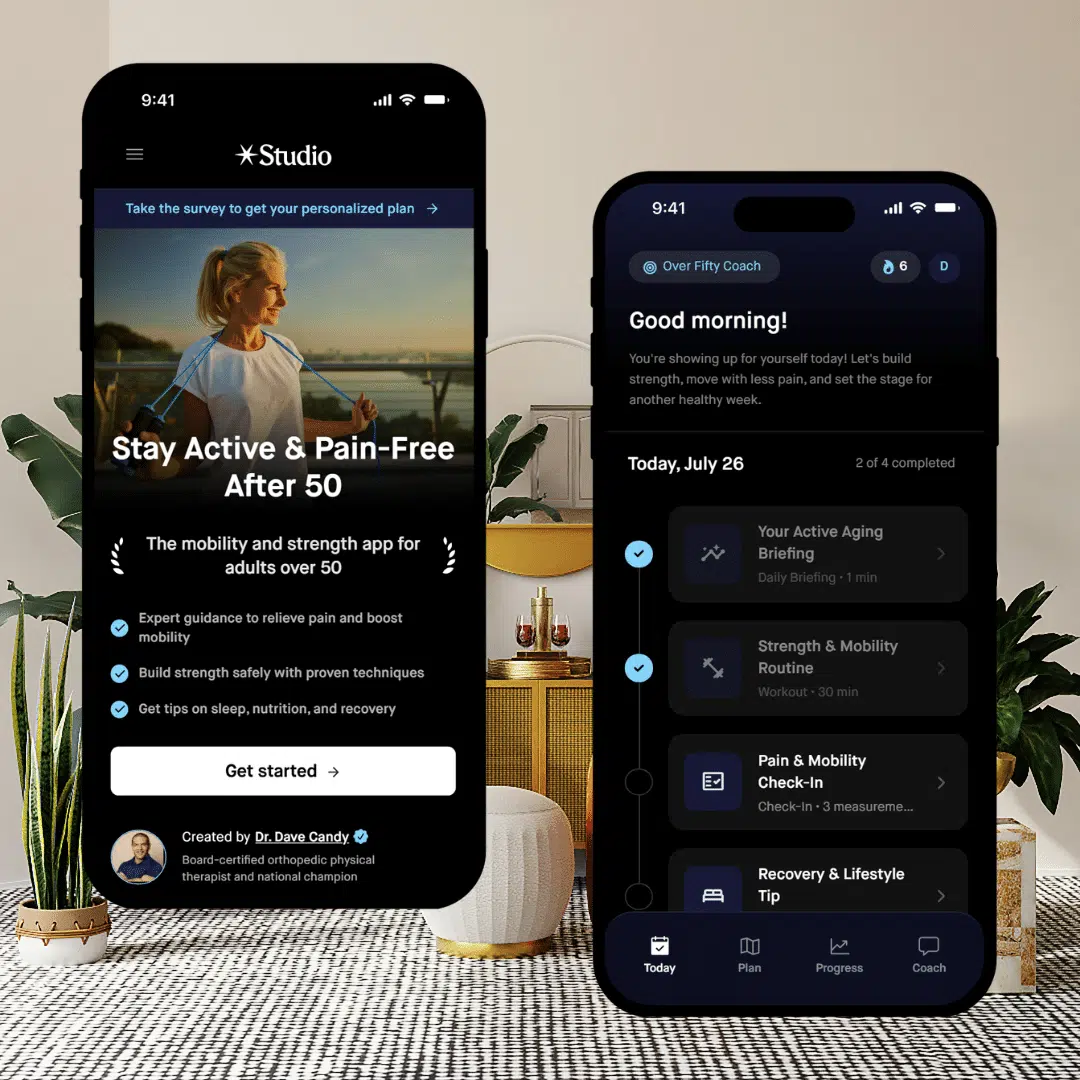
Need Help To Stay Strong and Mobile After 50?
Affiliate Disclosure: This post contains affiliate links to Amazon and/or other sites. While I only recommend products that I trust, as an Amazon Associate, I earn commission from qualifying purchases at no extra cost to you.
Medical Disclaimer: The content on this site is for educational and informational purposes only and is not intended as medical advice. Always consult with a qualified healthcare professional before beginning any new exercise program, diet, or supplement regimen, especially if you have pre-existing health conditions.