
Understanding Age-Related Muscle Loss
If you’re over 50 and feeling weaker in your legs, you’re not alone. Age-related muscle loss, known as sarcopenia, can begin as early as 30 but accelerates after 65. The good news is that weakness isn’t uniform; it often affects specific muscle groups rather than the entire body. This means you have control over maintaining your strength and mobility.
Assessing Your Strength: The One-Legged Sit to Stand
The first test involves a one-legged sit to stand, which engages your quadriceps, glutes, and balance. Start by attempting this on each leg. If standing up from a chair feels too challenging, modifications are available.
Modification for Beginners
If balance is an issue, lightly rest your heel on the floor for support while practicing the strength aspect. Alternatively, try this exercise from a higher surface, such as a bed or a chair with added pillows. Gradually reduce the height as your strength improves.
Building Calf Strength with Single-Leg Heel Raises
The second exercise focuses on calf strength. Stand facing a wall and perform a one-legged heel raise. Aim to go as high as possible until you feel fatigue. Ideally, younger adults can perform this 25 times, so use this as a guideline.
Progressing the Heel Raise
If a single-leg heel raise is too difficult, start with both feet and gradually shift your weight to one foot while lowering down. This helps build strength without overwhelming you.
Enhancing Balance: Standing on One Leg
Next, practice balancing on one leg for at least 10 seconds. This simple exercise significantly reduces your mortality risk and strengthens hip abductors, vital muscles for stability.
Tips for Balancing
If you struggle with balance, use a wall or chair for support. Work towards performing this exercise without holding onto anything to improve your stability over time.
Glute Strength with the Golfer’s Bend
The golfer’s bend, or single-leg deadlift, is another essential exercise. This move enhances glute and hamstring strength while challenging your balance. Start by holding onto a stable surface for support.
Advancing the Golfer’s Bend
Once you’re comfortable, try performing the movement without holding on. Focus on maintaining control and avoid risking a fall.
Final Exercise: The Lunging Test
Lastly, practice lunging down to touch your knee and then returning to a standing position. This exercise helps with your overall mobility and getting up from the floor.
Partial Lunges for Beginners
If you can’t perform a full lunge, begin with a partial lunge while holding onto something for balance. Increase your range of motion as your strength improves.
Conclusion: Take Control of Your Strength
These exercises not only help in assessing your leg strength but also serve as vital components of your fitness routine. If you find these too easy, consider exploring advanced variations. Consistent practice will lead to greater strength, mobility, and a healthier lifestyle.
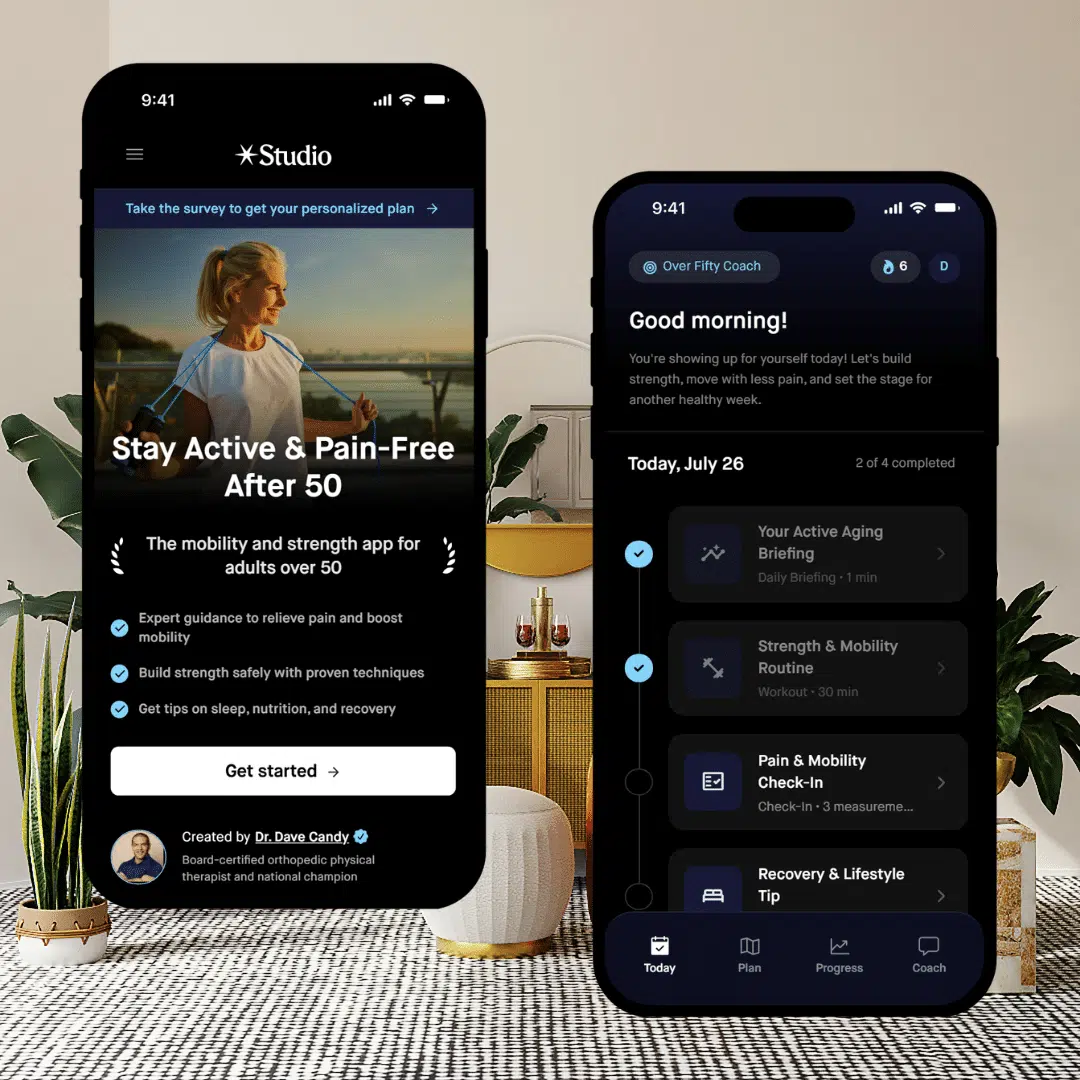
Need Help To Stay Strong and Mobile After 50?
Affiliate Disclosure: This post contains affiliate links to Amazon and/or other sites. While I only recommend products that I trust, as an Amazon Associate, I earn commission from qualifying purchases at no extra cost to you.
Medical Disclaimer: The content on this site is for educational and informational purposes only and is not intended as medical advice. Always consult with a qualified healthcare professional before beginning any new exercise program, diet, or supplement regimen, especially if you have pre-existing health conditions.