
Can You Really Get Stronger in 4 Minutes Per Day?
Recent research suggests that individuals over the age of 65 can indeed improve their strength with just four minutes of exercise each day. This study reveals the potential for even the most inactive individuals to enhance their physical abilities.
The Study Overview
The study involved participants aged 65 and older who were largely inactive, engaging in less than 60 minutes of exercise per week. They reported difficulties in walking and had no prior experience with resistance training. Participants were randomly divided into two groups: an exercise group and a control group.
Exercise Protocol
The exercise group engaged in four minutes of daily workouts for 12 weeks. This regimen included two minutes of exercise followed by two minutes of rest. The exercises were:
- 30 seconds of standing up from a seated position, followed by 30 seconds of rest.
- 30 seconds of step-ups, followed by 30 seconds of rest.
- 30 seconds of wall, table, or stair push-ups, followed by 30 seconds of rest.
- 30 seconds of resistance band rowing exercises, followed by 30 seconds of rest.
Results of the Study
At the end of the 12 weeks, the exercise group showed significant improvements compared to the control group. They were able to:
- Stand up from a seated position five times two seconds faster.
- Balance on one leg for three and a half seconds longer.
- Stand up from a chair four times more in 30 seconds.
These results highlight that even minimal effort can lead to substantial gains, particularly for previously inactive individuals.
Limitations of the Study
While the findings are promising, there are limitations to consider. All participants were initially inactive, and the American College of Sports Medicine guidelines recommend any resistance training over none, especially for untrained individuals. This means that those who were already active may not see significant improvements from just four minutes of exercise daily.
Additionally, two of the three outcome measurements focused on standing up from a seated position, which likely improved simply due to familiarity with the movement. Finally, a 12-week study duration may not capture long-term benefits, as participants could plateau with the same routine.
Building a Habit of Exercise
The most significant takeaway from this study is the importance of establishing a consistent exercise routine, even if it’s just for four minutes a day. Creating this habit can lead to greater motivation to gradually increase activity levels over time.
For example, author B.J. Fogg shares how he started exercising by doing two push-ups every time he went to the bathroom. Over time, this simple routine expanded to many more repetitions, illustrating how small steps can lead to larger changes.
Advice for Different Activity Levels
If you are completely inactive, focus on developing a habit of regular exercise. Start with short sessions, ensuring you don’t overwhelm yourself. Once you establish this routine, gradually increase the duration, intensity, and type of exercises you do.
If you find 30 minutes of daily workouts too challenging, reduce your sessions to 10 or 15 minutes. Once this becomes a habit, you can incrementally work back up to longer workouts.
For those already active, continue your current routine while considering incorporating new exercises to keep your regimen fresh and engaging.
Next Steps
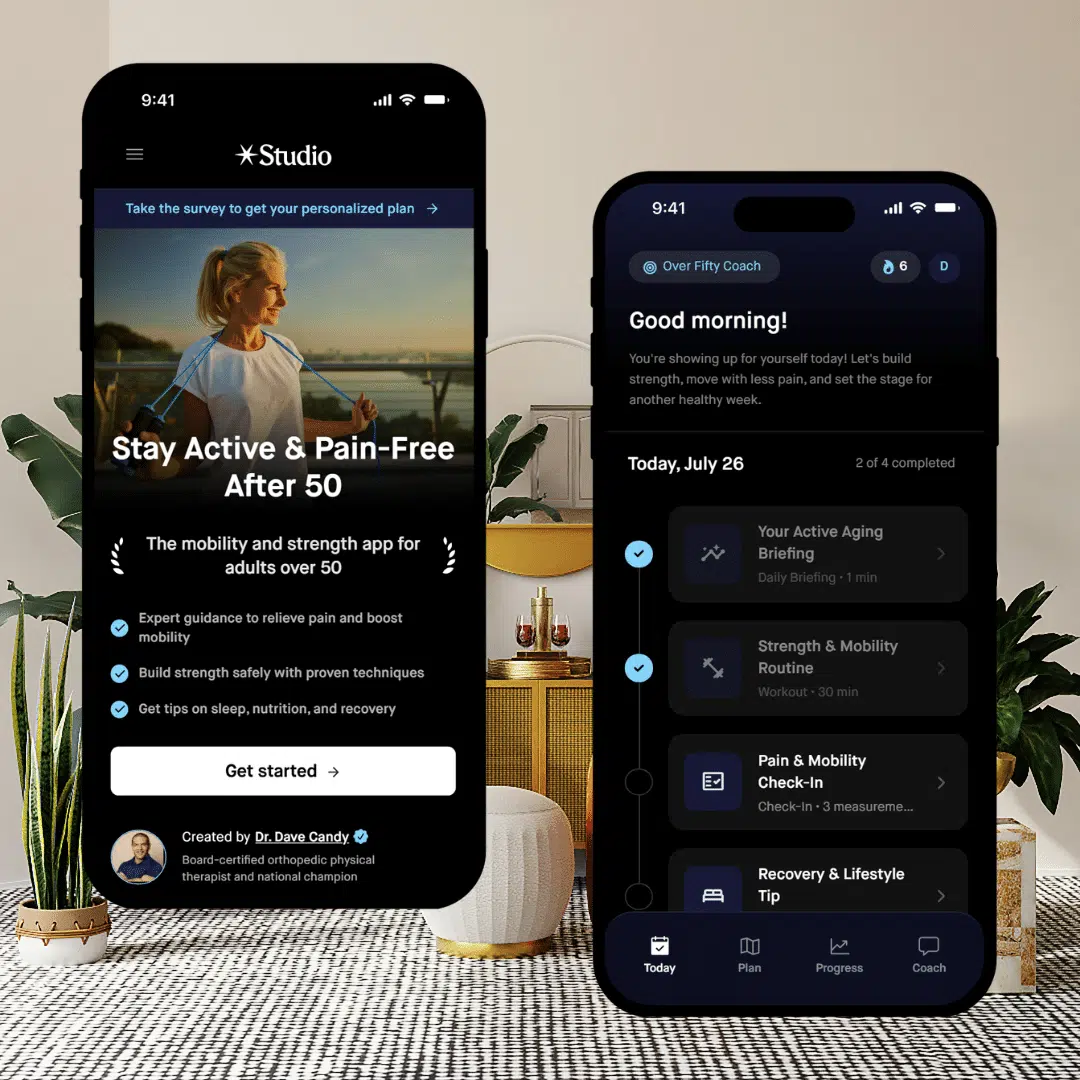
To further assist in your fitness journey, consider using apps like “Over 50 Coach,” which tailor daily workout plans based on your fitness level and goals. By starting small and focusing on consistency, you can gradually build strength and improve your overall health.
Remember, the key is to find what works best for you and to stay committed to your fitness journey.
Need Help To Stay Strong and Mobile After 50?
Affiliate Disclosure: This post contains affiliate links to Amazon and/or other sites. While I only recommend products that I trust, as an Amazon Associate, I earn commission from qualifying purchases at no extra cost to you.
Medical Disclaimer: The content on this site is for educational and informational purposes only and is not intended as medical advice. Always consult with a qualified healthcare professional before beginning any new exercise program, diet, or supplement regimen, especially if you have pre-existing health conditions.