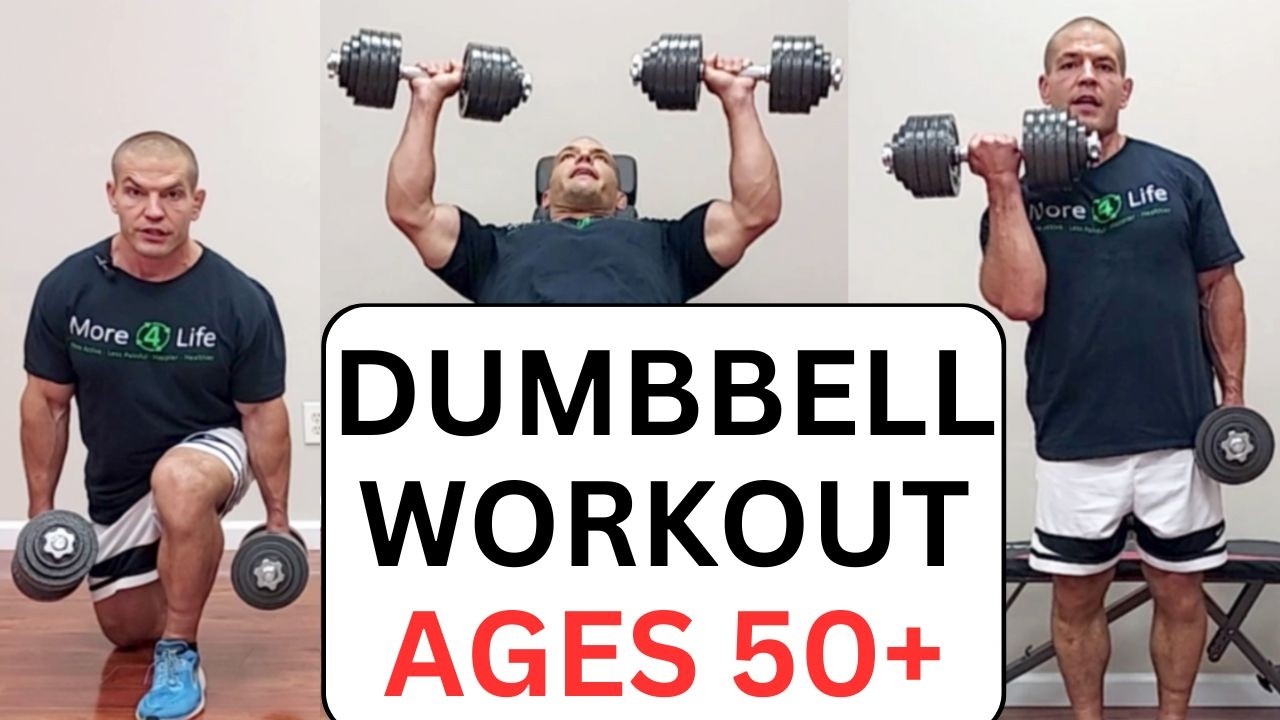
Introduction to Full-Body Dumbbell Workouts
If you’re over 50 and looking to enhance your strength and fitness, a full-body dumbbell workout is a perfect choice. Not only does it help in building muscle, but it also supports overall health without risking injury. In this post, we’ll guide you through effective dumbbell exercises tailored for seniors, ensuring you can safely build strength from the comfort of your home.
Choosing the Right Dumbbells
Before starting your workout, it’s essential to select the right equipment. Adjustable dumbbells are ideal as they allow you to change weights easily for different exercises. When purchasing dumbbells, consider:
- Buying weights that you can grow into as you get stronger.
- Choosing adjustable options that allow for smaller weight increments, which is beneficial when starting light.
- Ensuring that the grip is comfortable and secure.

Lower Body Exercises
We will begin with lower body exercises that form the foundation of your strength training.
Dumbbell Squats
To perform a dumbbell squat, hold the weights either at your sides or at shoulder level for a front squat. If you have lower back issues, it’s recommended to keep the weights lower. Follow these steps:
- Stand with your feet shoulder-width apart, holding the dumbbells.
- Lower your body by bending your knees and sitting back on your heels.
- Ensure your knees don’t cave inwards; instead, drive them outward.
- Perform 3 sets of 10 repetitions.
Dumbbell Deadlifts
The deadlift targets your glutes and hamstrings. Here’s how to do it:
- Hold the dumbbells at arm’s length in front of you.
- Bend your hips back while keeping your spine straight, lowering the weights to about shin level.
- Drive through your heels to return to standing.
- Complete 3 sets of 10 repetitions.
Lunges
Lunges significantly challenge your stability. You might want to start without weights:
- Step forward with one leg, lowering your hips until both knees are bent at about a 90-degree angle.
- Keep your weight in the heel of your front foot.
- Perform 3 sets of 10 repetitions on each leg.
Calf Raises
This exercise strengthens your calves and improves balance:
- Stand up straight and slowly raise your heels off the ground, balancing on your toes.
- For more challenge, try single-leg calf raises.
- Do 3 sets of 10-15 repetitions.
Upper Body Exercises
Next, we’ll focus on upper body workouts to improve strength and stability.
Bench Press
The bench press can be performed on a flat or inclined surface:
- Lie back on a bench, holding the dumbbells at chest level.
- Press the weights upward while keeping your elbows slightly tucked.
- Do 3 sets of 10-12 repetitions.
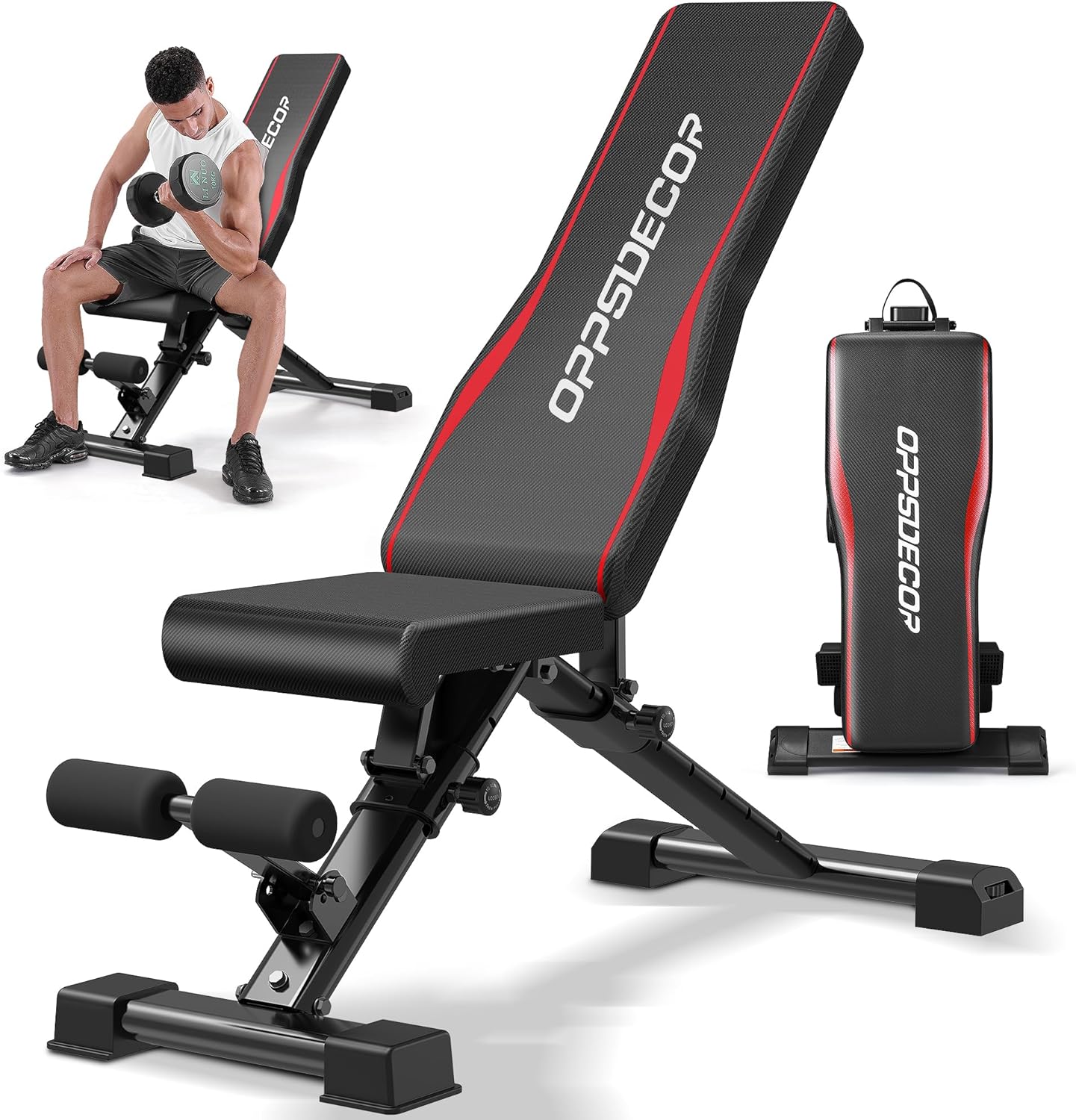
Incline Bench Press
This variation targets the upper chest muscles:
- Set your bench at a 30-60 degree angle.
- Press the weights above your chest, keeping elbows in.
- Complete 3 sets of 10-12 repetitions.
Shoulder Press
This exercise strengthens the shoulders:
- Adjust your bench to a slight incline.
- Press the weights overhead, keeping your elbows slightly forward.
- Perform 3 sets of 10-12 repetitions.
Dumbbell Rows
Rows strengthen your back muscles:
- Support your body on a bench with one knee and hand.
- Pull the dumbbell towards your side, focusing on your elbow movement.
- Complete 3 sets of 10-12 repetitions on each side.
Conclusion
Incorporating this full-body dumbbell workout into your routine can significantly enhance your strength, balance, and overall health. Start slowly, listen to your body, and gradually increase the weights as you get stronger. Remember to consult a healthcare professional before beginning any new exercise program, especially if you have existing health concerns.
Start your strength training journey today and enjoy the benefits of a healthier lifestyle!
Need Help To Stay Strong and Mobile After 50?
Affiliate Disclosure: This post contains affiliate links to Amazon and/or other sites. While I only recommend products that I trust, as an Amazon Associate, I earn commission from qualifying purchases at no extra cost to you.
Medical Disclaimer: The content on this site is for educational and informational purposes only and is not intended as medical advice. Always consult with a qualified healthcare professional before beginning any new exercise program, diet, or supplement regimen, especially if you have pre-existing health conditions.