
Understanding the Balance: Heavy Weights and High Reps
One of the most common fitness questions is whether to lift heavy weights for low reps or lighter weights for higher reps. Many believe you have to choose one, but what if you could enjoy the benefits of both? In this post, we’ll explore how to lift heavier weights while also incorporating higher reps, allowing you to get stronger without damaging your joints.
Defining Heavy Weights
When we talk about heavy weights, it’s important to understand that ‘heavy’ is relative. For one person, heavy may mean 500 lbs, while for another, it might be 20 lbs. For the sake of this discussion, we can consider heavy weights as those you can lift for no more than five repetitions.
Goals of Strength Training
Your goals play a significant role in determining your lifting strategy. If your aim is simply to enhance your day-to-day functionality, any rep range will suffice. However, if you’re focused on building muscle size or definition, research indicates that the specific rep range is less critical as long as you work close to muscle failure.
Building True Strength
To achieve true strength, defined as the ability to lift something heavy once or a few times, it’s necessary to lift heavier weights periodically. However, consistently lifting heavy every set can lead to joint wear and tear over time. The good news is that you don’t have to limit yourself to traditional 5×5 or three sets of ten routines. Here’s how you can blend both approaches effectively.
The Pyramid Protocol
The first effective method to achieve both strength and joint safety is the pyramid protocol. This involves starting with lighter weights and higher reps, gradually progressing to heavier weights for lower reps, and then returning to lighter weights.
How to Implement the Pyramid Protocol
- Begin with warm-up sets that are lighter and do not approach failure.
- The number of warm-up sets will depend on how heavy you plan to lift.
- Once you reach your heavy sets, choose a weight for which you can perform one to five repetitions.
- Perform two to three sets at this heavy weight, ideally training in the three to five repetition range.
- After completing your heavy sets, pyramid back down to a lighter weight for 8 to 12 repetitions.
- Consider adding a burnout set to reach muscle failure with the lighter weight.
Isolation Exercises and Drop Sets
When it comes to isolation exercises, such as bicep curls and lateral raises, you might not need to lift heavy weights. Instead, you can focus on moderately heavy weights in the six to eight repetition range.
Implementing Drop Sets
One effective technique for isolation exercises is the drop set. Here’s how to execute it:
- Select a moderately heavy weight you can lift for six to eight reps.
- Perform three sets of this weight, aiming to hit failure around five to six repetitions on the last set.
- Upon reaching failure, immediately decrease the weight by one-third to one-half and perform another set to failure.
- Repeat this process one more time, dropping the weight again for a final set to complete failure.
This method allows you to combine the benefits of both heavier weights and higher repetitions, facilitating muscle growth while minimizing joint stress.
Conclusion: Finding Your Balance
Finding a balance between heavy weights and high reps can enhance your strength training regimen while protecting your joints. By implementing techniques like the pyramid protocol and drop sets, you can maximize your results without compromising your long-term joint health.
Now, we’d love to hear from you! What rep range do you prefer? Have you tried pyramids or drop sets in your workouts? Share your experiences and thoughts in the comments below!
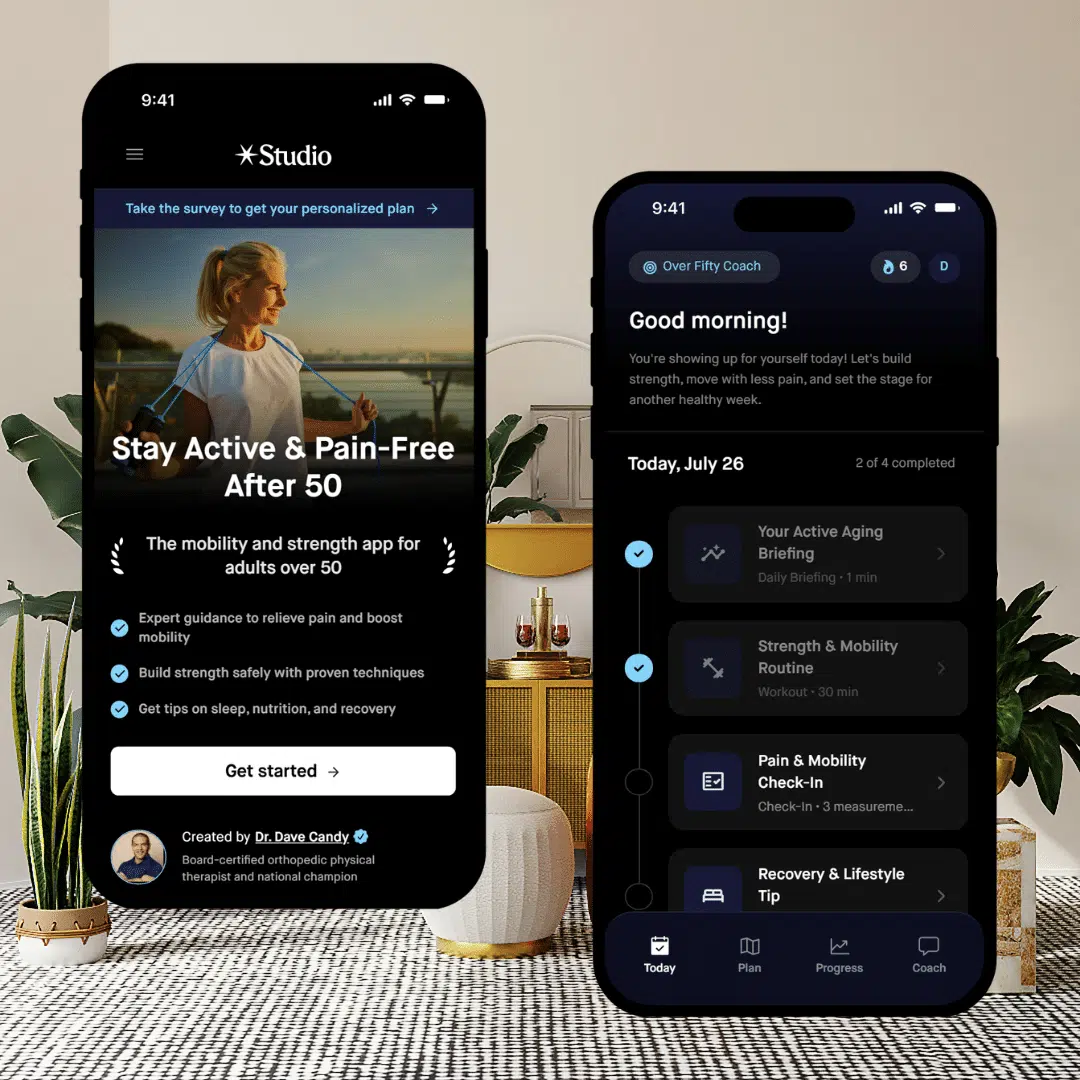
Need Help To Stay Strong and Mobile After 50?
Affiliate Disclosure: This post contains affiliate links to Amazon and/or other sites. While I only recommend products that I trust, as an Amazon Associate, I earn commission from qualifying purchases at no extra cost to you.
Medical Disclaimer: The content on this site is for educational and informational purposes only and is not intended as medical advice. Always consult with a qualified healthcare professional before beginning any new exercise program, diet, or supplement regimen, especially if you have pre-existing health conditions.